Explore seven workplace communication styles and learn how each impacts trust, productivity, and team culture.

Why Communication Styles Matter
Communication is more than words. Tone, body language, and intent shape how messages are received, often more powerfully than the content itself. In workplaces today, especially hybrid and digital ones, misaligned communication styles can fuel misunderstandings, lower morale, and drive turnover.
Recent studies reinforce this: according to the Niagara Institute, nearly 75% of professionals globally identify assertiveness as their dominant style (Niagara Institute, 2023), yet a 2024 survey by Preply shows 83% of employees have received passive-aggressive emails from colleagues, often leading to stress and disengagement (Preply, 2024).
So, what do these styles really look like? And how do they affect team dynamics? Let’s explore.
Communication Styles, in Action
Assertive – Clear, Respectful, and Fair

Aisha is a Project Manager
When deadlines began to slip on a recent project, Aisha didn’t lash out or stay silent. Instead, she looked her team in the eye and said, “I feel concerned when deadlines slip, because it puts pressure on the rest of the team. Can we adjust our timeline?”
Her colleagues describe her as confident yet approachable, someone who balances honesty with respect. A 2025 Axios HQ study showed that assertive communicators foster openness and psychological safety, particularly in hybrid meetings where tone is harder to interpret. Assertiveness allows people to voice concerns directly, without shutting others down.
- How it shows up: Uses “I” statements; listens actively; maintains calm posture and eye contact; says “no” without guilt.
- Impact: Builds trust, supports problem-solving, reduces resentment.
“I feel” language is assertive because it is self-focused, clear, and respectful—the foundation of effective communication.
Why “I Feel” Language Signals Assertiveness
“I feel” statements are one of the clearest signs of assertive communication because they balance self-expression with respect for others. “I” statements improve fairness and psychological safety in workplaces (Axios HQ, 2025; UR Medicine, 2025).
- Takes ownership and centers your experience rather than blaming.
- Shows clarity without aggression and expresses needs directly.
- Invites dialogue and frames communication as a conversation, not a conflict.
Passive – Quiet at a Cost

Michael is a talented analyst who rarely voices disagreement.
In meetings, he nods along even when he has concerns, later telling colleagues privately that he’s frustrated. Outwardly, this seems polite; inwardly, it’s exhausting.
A 2024 report by BetterUp highlights how unspoken dissent lowers productivity and reduces innovation. Passive communication maintains surface harmony but undermines long-term team performance.
- How it shows up: Avoids eye contact, hesitant tone, lets others decide.
- Impact: Needs unmet, resentment builds, risk of burnout.
Aggressive – Loud but Alienating

Meet Leon
During meetings, Leon cuts colleagues off mid-sentence, raising his voice whenever he sees the need to make a point. His short-term wins are visible, decisions get made quickly, but over time, fewer people contribute.
Aggressive communication prioritizes dominance over dialogue. Gallup’s 2024 workplace survey warns that such environments lead to disengagement and high turnover, as employees withdraw from unsafe spaces.
How it shows up: Interruptions, blaming language, sarcasm, intimidating posture.
Impact: Achieves quick wins, but breaks trust and creates hostility.
Passive-Aggressive – The Hidden Roadblock
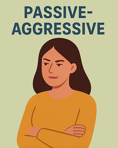
Sophia is a member of a project team
Sophia agrees to take on a task but delivers it late with obvious errors. She never confronts the issue directly, but later vents to peers about feeling overlooked.
This style, appearing agreeable on the surface while resisting indirectly, is one of the most damaging. The Preply 2024 study found passive-aggressive communication (like silent treatment or vague emails) is the most common workplace frustration.
agreeable on the surface while resisting indirectly
- How it shows up: Sarcasm, silent treatment, procrastination.
- Impact: Creates confusion, unresolved conflict, and erodes trust.
Instead of sarcasm, try direct feedback in private
Reflective – Thoughtful but Misunderstood

This is Jolomi.
In team meetings, Jolomi tends to stay quiet. He prefers asking clarifying questions and often follows up with a detailed email the next day. Some mistake this for disengagement, but his insights are typically the most measured.
Reflective communication allows for depth but may be misread as aloofness. Harvard Business Review (2024) notes that reflective communicators excel in strategy settings but require clear norms so others understand their process.
How it shows up: Asks clarifying questions, prefers writing, asks for time to think.
Impact: Contributions are well-thought-out but may appear “slow” to others.

Submissive – Self-Silencing

Meet Amira
Amira constantly defers decisions with phrases like, “Whatever you think is best.” While seen as cooperative, this pattern leads colleagues to overlook her ideas.
Research from the University of Rochester (2025) suggests submissive communicators face higher risks of stress and burnout because they suppress their own needs.
How it shows up: Over-apologizing, avoiding decisions, self-effacing.
Impact: Loss of self-identity, lack of respect from peers, vulnerability to exploitation.
Manipulative – Influence Without Transparency

Here is James
James flatters his manager before making requests and occasionally plays the victim to avoid accountability. While subtle, these tactics create imbalance in his team.
According to a 2024 Journal of Organizational Behavior review, manipulative communication erodes trust, fostering resentment and unhealthy power dynamics.
How it shows up: Guilt-tripping, “bait and switch,” backhanded compliments.
Impact: Creates toxic relationships, undermines collaboration.
Conclusion
Communication styles are not fixed; most of us shift between them depending on context. However, recognizing your default and the impact it has on others is the first step toward healthier collaboration.
Assertive communication, anchored in clarity, respect, and ownership, emerges consistently as the most effective style. As research shows, it strengthens trust, enhances fairness, and builds healthier workplaces.
For leaders and teams, investing in understanding and practicing better communication styles isn’t a soft skill, it’s a performance multiplier.
Would you like to train your team in effective communication? We would love to hear from you. Contact us to design a tailored workshop.
References
- Axios HQ. (2025). Internal communication trends for 2025. Retrieved from Axios HQ
- Preply. (2024). Passive-aggressive emails at work: Survey findings. Retrieved from Preply
- Gallup. (2024). State of the Global Workplace Report. Retrieved from Gallup
- Harvard Business Review. (2024). The power of reflective leaders. Retrieved from HBR
- UR Medicine. (2025). Avoid passive-aggressive communication at work. Retrieved from URMC
- Journal of Organizational Behavior. (2024). Indirect communication and workplace dynamics. Wiley.